
JUST PUBLISHED: Shelf-made men: why publishing still favours the well-connected
In May of this year, it was reported that writing and publishing in the UK is in crisis. There was said to be a “growing marginalisation of working-class people whose stories and experiences are not being heard”, according to the backers of a new literary magazine and platform.
The Bee, edited by Richard Benson, told The Guardian that it was well known the creative industries were “massively skewed” in terms of representation, but that writing and publishing were “even more skewed”.
Their own data describes an industry shaped by the old-school-tie crowd, where opportunity tends to land with the silver-spoon set, and routes into print favour people who already move comfortably inside publishing circles. In simple terms, those born already-inside progress faster than those arriving from estates, factories and night shifts.
In 2014, for example, 43 per cent of publishing staff came from middle-class backgrounds and just 12 per cent from working-class families; by 2019, the middle-class figure had risen to 60 per cent. Sutton Trust research, meanwhile, places only one-in-10 published authors as working class. That is what happens when an entire sector drifts into the hands of the trust-fund brigade and the private-club types who can afford to wait for opportunity.
This matters to me because I know what it feels like to come into writing without wealth, contacts, or the introductions that seem to fall into the laps of toffs and well-connected insiders. I never went to university. I didn’t have family in publishing, teachers who knew agents, or friends who could guide me through the process. Like most working-class people, I had to learn the hard way how publishing works and where someone like me is supposed to stand within it. My success came from long hours of graft and stubborn persistence — the sort of work the Mayfair set rarely has to do.
In fact, the first literary agent I ever secured came only after an act of sheer desperation. In 2012, struggling to get anyone to look at my work, I hired a mobile billboard and hand-delivered a pamphlet to every literary agency in London. That stunt finally got me an agent, which then led to the publication of Extracted and the huge international success that followed.
To properly understand the imbalance between rich and poor in publishing, I recently spent several evenings in my local Waterstones to check who is actually getting published. I photographed every fiction shelf in the shop, then created a spreadsheet and entered every author’s name. After that, I checked where each writer studied, what jobs they held before publication, and whether they had worked in media or publishing. Some names were easy to confirm. Others took much longer and required digging through interviews, author bios, LinkedIn pages and prize listings.
When the spreadsheet was complete, the pattern was obvious. Most of the authors had university backgrounds tied to the industry. Many had worked in journalism, TV or publishing before writing books. A large number had contacts or prior access — the kind that rarely reaches the working-class majority, and routinely falls to those who already brunch with the well-feathered and well-placed.
My results backed up what The Bee is saying: working-class writers do not begin with the same access.
Unlike the privileged few, working-class writers write on borrowed time — at kitchen tables, on buses, after factory shifts, with children asleep in the next room. They write while worrying about bills, rent, food, heating, childcare and job security. They learn pacing and structure without mentors, and they improve their grammar alone. Meanwhile, the silver-spoon set grows up surrounded by books, contacts, editing advice and people who can pick up a phone on their behalf.
It comes down to time, money, and upbringing — things the already-inside inherit while everyone else builds them from scratch.
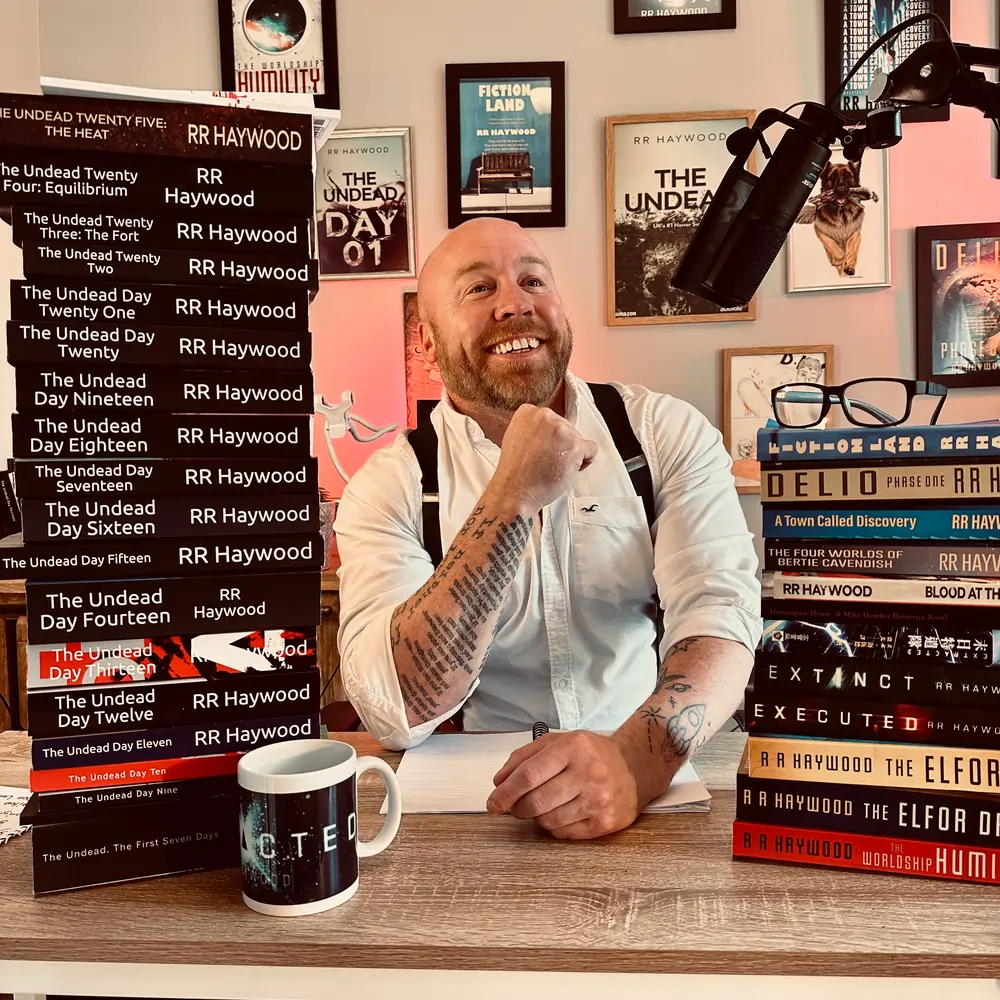
The Bee is addressing the gap from the outside. I am working on it from within fiction. Since the summer of 2025, I have been publishing working-class writers inside my Undead universe. Three titles are out already, a fourth is due in December, and more are planned for January. All have reached bestseller lists.
Most of the authors I represent have no creative-writing background to speak of. Some left school early. Many work minimum-wage jobs. They arrive without Oxbridge polish, but with imagination, life experience and something to say.
We edit the books together. We fix grammar. We tighten scenes. We keep the voice real. Three titles are out already. A fourth is on the way. All have reached bestseller lists.
Their success shows what The Bee has been saying clearly: the talent is everywhere — the access is not.
