
JUST PUBLISHED: New Year, same question: will I be able to leave the house today?
January is the season of resolutions. People make lists about discipline and self-improvement. They promise to be more organised, more consistent, more reliable. They set targets and timelines. They talk about follow-through.
I live with cerebral palsy. I use a wheelchair. My life already runs on planning, structure, and foresight. A simple journey often requires more organisation than most people put into a week. That planning rests on a single assumption: that the systems designed to support disabled people will do what they say they will do.
My New Year’s resolution is simple. I want to move through my own life without it becoming an endurance test.
The public conversation about accessibility often sits in the language of policy. It treats access as a standard and inclusion as a principle. My experience sits in practical reality. It sits on platforms, on concourses, in the gap between a train and a station edge. It sits in a home that becomes a maze when the wheelchair that gives me mobility stops working.
When I travel by train, I plan meticulously. I check timetables. I book station assistance well in advance. I arrange the journey down to the minute because each minute matters. A wheelchair user does not get to improvise around stairs, heavy doors, platform gaps, and crowds. Every stage relies on someone else doing what has been agreed.
I have had days when I booked assistance at a major station weeks ahead, received confirmation, and arrived with confidence grounded in the assumption that the system would function. I arrived. No one came. The person I was relying on was nowhere. Phones rang unanswered. Staff on the concourse looked unsure how to help. I stood there stranded, exposed, dependent on a promise that had evaporated.
This is not a minor inconvenience. It is a safety issue. A railway station can look straightforward when you walk. For someone using a wheelchair, it can become a sequence of obstacles that require skilled help. Steps do not negotiate. Gaps do not reduce themselves. Doors do not become lighter because someone is late. Each minute without support increases stress and vulnerability. The fear of falling, the fear of being stuck, the fear of missing a connection builds with every passing moment.
When booked assistance fails, the consequences cascade. A missed connection becomes lost hours. An appointment gets cancelled. Work suffers. Opportunities disappear. The breakdown has a paper trail in booking systems and confirmation messages, and it still lands in the body and the mind of the person who is left waiting.
The emotional damage carries its own weight. Dependency already requires careful management. The system magnifies that sensitivity when it fails publicly and decisively. There is a particular humiliation in being visible only at the moment things go wrong. There is a particular loneliness in realising that the infrastructure has been designed to work for everyone else first.
On the day I was stranded, I negotiated the station on my own. Every step was measured. Every doorway was calculated. Every gap became a risk assessment. I relied on sympathetic strangers where I could. I arrived at my destination drained physically and taxed mentally. A commute became an ordeal.
That experience, specific as it is, reflects a wider pattern. The gap between policy and reality is where disabled people live. Transport operators speak about “accessible stations” and “inclusive travel”. Real life is determined by staffing levels, training, communication, and accountability. Booking systems can operate perfectly on paper and still collapse in practice. Disabled people pay the price when that happens.
The same dynamic governs the most basic tool in my life.
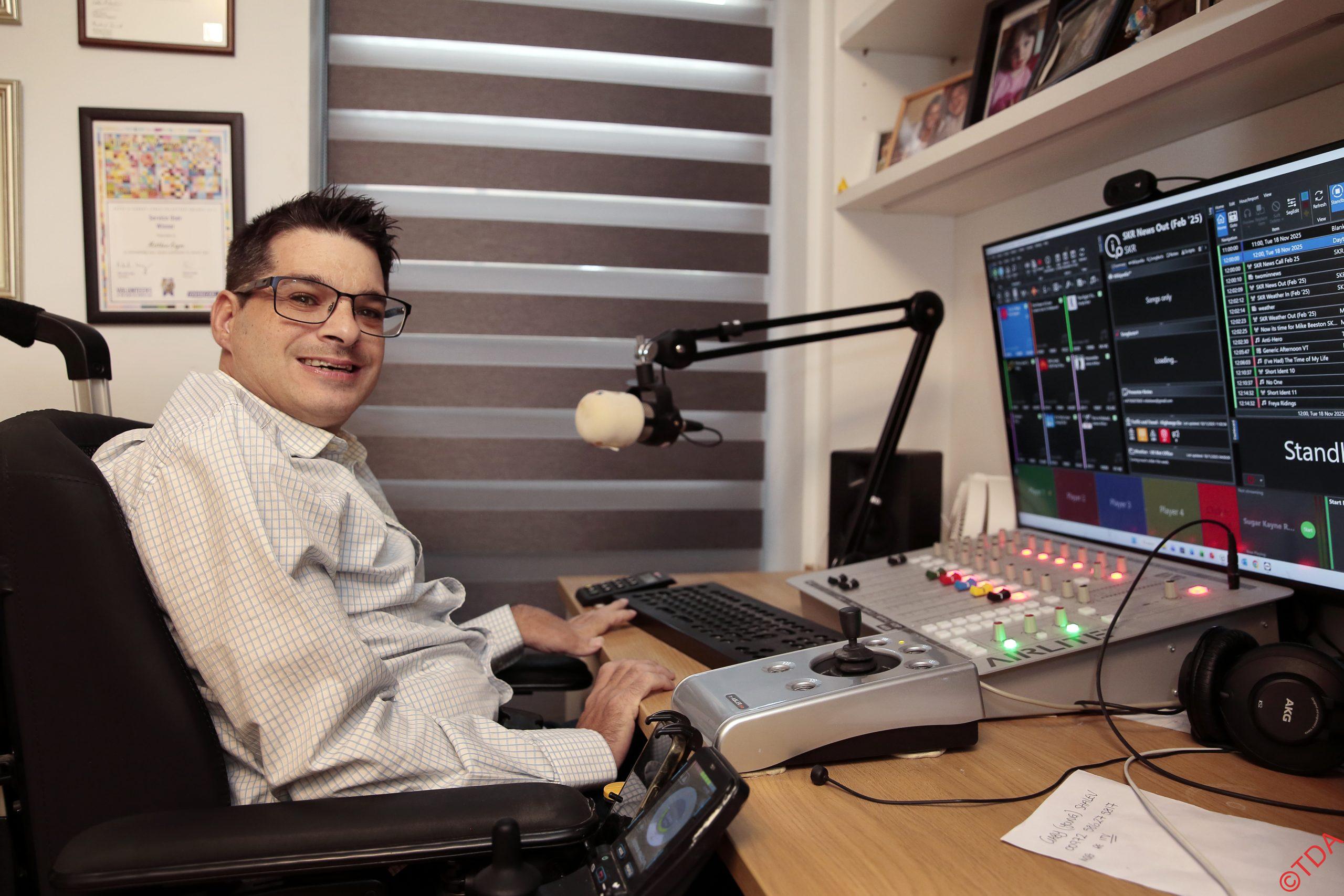
a picture caption underneath the photo of him in his wheelchair.
When my wheelchair broke, I waited six weeks for repair. Six weeks is a season of missed opportunities. Six weeks is long enough for routines to collapse and confidence to weaken. The first morning without it felt surreal. My home became a labyrinth. Rooms that normally gave me control became obstacles. Each journey from bedroom to bathroom, from kitchen to living area required careful planning, extra time, and physical effort.
Outside, the world narrowed further. Pavements assume a certain kind of body. Public transport assumes a certain kind of movement. TALENTs and offices assume you can reach, turn, enter, exit. Without my wheelchair, every outing became a negotiation with the environment. I evaluated entrances and thresholds and distances. I weighed risk and fatigue before I even left the house. That constant calculation is exhausting. It is demoralising. It is isolating.
The psychological weight of those six weeks stayed with me day by day. Independence for most people is background noise. For disabled people, it is something that can be removed with a broken part and an unreturned call. Every day without a working wheelchair is a reminder of dependency. You rely on friends, family, carers. You rely on people for small tasks that should remain yours. The sense of agency diminishes. Frustration, anxiety, anger, and sadness arrive together.
The repair process adds its own strain. Each phone call feels like a negotiation. Timelines are vague. Priorities are unclear. You are reminded repeatedly that the system runs on its own terms. I documented conversations, delays, miscommunication. The pattern became clear. Disabled people are expected to absorb delay as a normal condition of life.
Life continues around this. Work commitments do not pause. Medical appointments do not reschedule themselves. Social invitations do not remain open indefinitely. Each cancellation becomes a personal and professional setback. Opportunities that were hard-won vanish quietly. Independence is fragile. When the tool that makes it possible is removed, life changes dramatically.
There is another burden in experiences like these. They remain invisible to most people. The outside world sees a person who “can’t go out” or “needs help”. It rarely sees the physical pain, the mental strain, the lost opportunities, the administrative labour, the erosion of confidence. The struggle is constant and silent.
These stories are not rare. Thousands of disabled people face long waits for equipment repairs, unsuitable provision, and fragmented communication between providers and authorities. Staffing, training, infrastructure, and contingency planning all matter. Accountability matters most of all. When a service fails, the consequences land on the person who relied on it.
Informal support networks often save the situation. Friends, family, carers step in to bridge the gap. Their help can be the difference between coping and catastrophe. Their presence also reveals how precarious independence can be. A dignified life should not rely on luck and goodwill.
New Year’s resolutions mean something when they are built into daily action. Accessibility works the same way. It lives in staffing rotas, training, communications systems, maintenance schedules, response times, and clear responsibility when things go wrong.
The actions required are not abstract. Booked station assistance needs reliable delivery. Stations need staff who know what to do and systems that answer when disabled passengers call. Wheelchair repairs need rapid response, clear timelines, proactive maintenance, and a recognition that a broken chair breaks more than equipment. It breaks participation.
I write this in the New Year because people understand the language of commitments. They understand promises made and promises kept. Disabled people live inside promises that rarely receive the urgency they deserve.
My resolution is to keep living fully. The system’s resolution should be to stop making that harder than it already is.
Reliability is not a favour. Dignity is not optional. Access is a condition of equal citizenship. When assistance fails to arrive and repairs take weeks, disabled people do not merely feel inconvenience. We lose time, safety, confidence, work, health, and the ordinary freedom to move through our own lives.
